Digital advertising is becoming more visual, automated, and audience driven. Google’s Demand Gen campaigns sit at the center of that evolution, giving advertisers a way to generate interest and drive action across some of Google’s most visual properties.
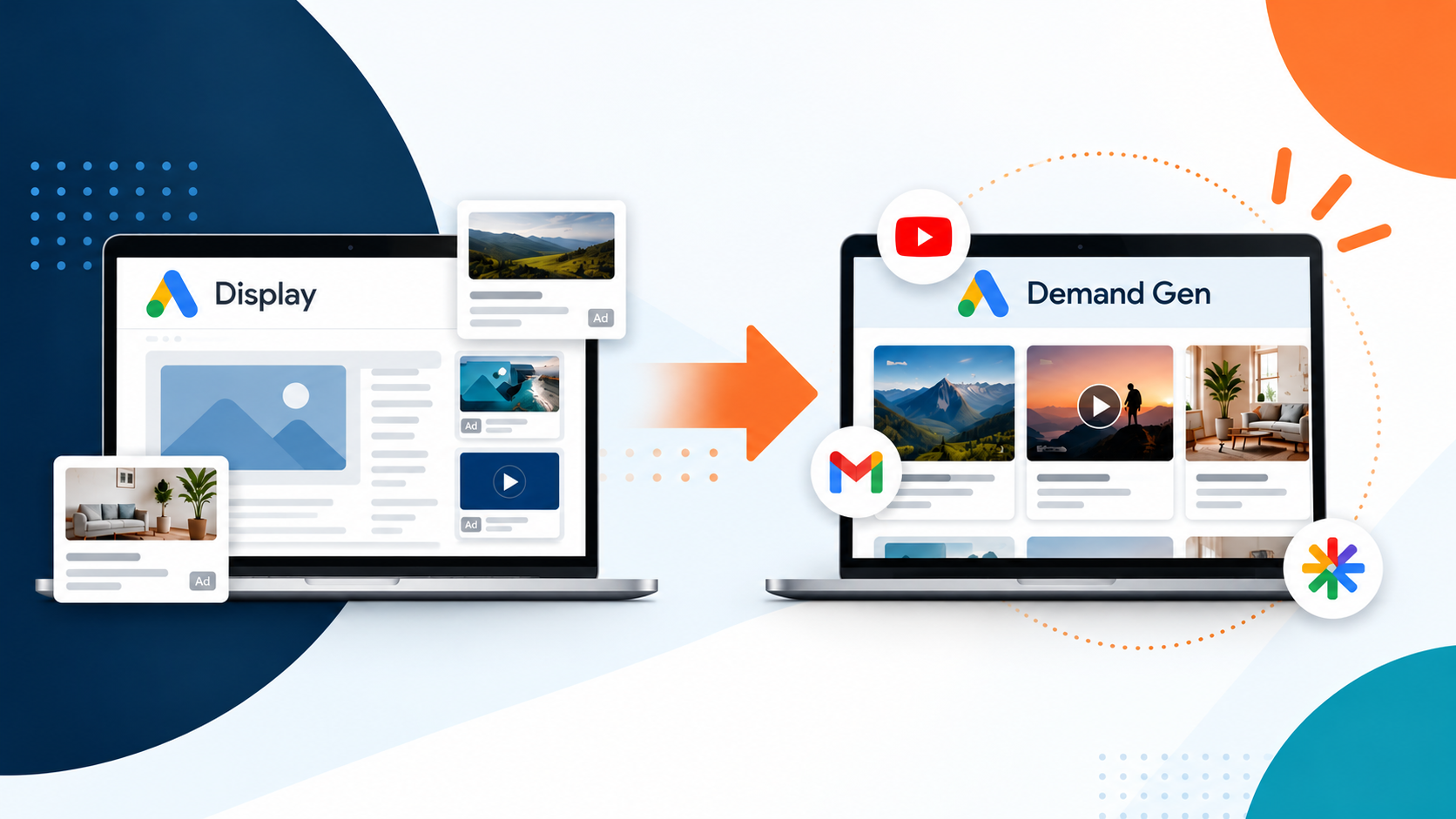
Demand Gen is becoming even more important. Google has announced that Google Display Ads campaigns are moving into Demand Gen, with the transition expected to be completed by 2027.
For advertisers accustomed to traditional Display campaigns, this represents a significant change in how visual advertising is planned and managed within Google Ads.
What Are Google Demand Gen Ads?
Google Demand Gen is a campaign type designed to help advertisers reach potential customers while they are discovering content, researching products, and considering purchases.
Demand Gen can serve across YouTube, Discover, Gmail, Maps, and the Google Display Network (GDN). Google says these campaigns can reach up to three billion monthly active users across its visual surfaces.
Rather than relying exclusively on users actively searching for a product, Demand Gen helps brands create demand by reaching relevant audiences before or while they are making purchasing decisions.
In that respect, Demand Gen can feel closer to paid social advertising than traditional keyword-based Google Search campaigns.
How Demand Gen Fits Into the Customer Journey
Demand Gen is designed to reach consumers during discovery and consideration moments.
That makes the campaign type useful for objectives such as:
- Introducing products to new audiences
- Generating consideration
- Re-engaging previous website visitors
- Reaching audiences similar to valuable existing customers
- Supporting product launches
- Driving online conversions
- Complementing other tactics for a full funnel approach
The objective isn’t simply to capture existing demand. It is also to help create and nurture demand before the customer reaches the bottom of the funnel.
Creative Is Central to Demand Gen
Demand Gen is fundamentally a visual advertising product. Advertisers can use image, video, carousel, responsive display, and product-feed-based creative options, with available formats varying by placement. Google has also incorporated generative creative capabilities into the campaign type.
That makes creative strategy especially important.
Instead of relying on one image and one message, advertisers should consider building a portfolio of assets that can work across different placements and stages of the customer journey.
For example, an advertiser could use:
- Short-form video to introduce a product on YouTube Shorts.
- Lifestyle imagery to generate consideration across Discover.
- Product-focused creative to reconnect with previous website visitors.
- Responsive Display Ads to extend reach across GDN.
The strongest Demand Gen strategy is therefore not simply an audience strategy. It is an audience-plus-creative strategy.
How Advertisers Should Prepare
Brands currently investing in Google Display should begin assessing what the transition means for their campaigns.
Prioritize expanding your creative toolkit. Demand Gen rewards a multi-format approach, so advertisers should develop strong image and video assets in multiple aspect ratios rather than depending on a small collection of traditional banners.
Additionally, strengthening first-party audience strategies will be valuable. Customer lists, remarketing audiences, and high-value customer segments can provide useful inputs for Demand Gen targeting and lookalike strategies.
What Demand Gen Signals About the Future of Google Ads
The migration of Display into Demand Gen is bigger than a campaign-interface change. It reflects a broader shift toward advertising that combines audiences, automation, visual creative, first-party data, and multiple inventory sources within fewer campaign frameworks.
For advertisers, the opportunity is to use this transition to rethink Display not as a standalone channel, but as part of a more integrated strategy for creating demand, influencing consideration, and ultimately driving action.
Media Placement Services Can Help
Whether you’re launching your first paid media campaign or scaling an enterprise-level omnichannel strategy, Media Placement Services can help you navigate the ever-changing landscape to maximize your marketing investment.
Contact Media Placement Services today to build a customized paid media strategy that reaches the right audience, in the right place, at the right time.